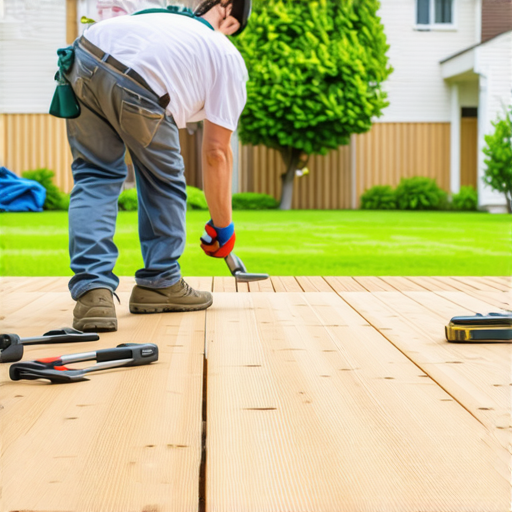
It was a sunny Saturday afternoon when I first noticed the annoying scratch running across my beloved composite deck. At first, I thought it was just a small blemish, but as days went by, it seemed to dull the entire space I loved for entertaining. I’ve been there—seeing your outdoor oasis marred by a simple mistake or wear and tear can be discouraging. But let me tell you, there’s hope, and restoring your deck isn’t as hard as you might think.
Why Scratches Can Feel Like a Deck’s Demise—and How to Fight Back
Composite decking is celebrated for its low maintenance and durability, but it’s not invincible. Over time, scratches, dents, and scuffs can erode that pristine appearance we strive for. These imperfections can be caused by careless foot traffic, dropped tools, or even kids’ outdoor adventures. Not only do they detract from your deck’s aesthetics, but they can also lead to more serious damage if left unaddressed.
I remember making a rookie mistake early on—assuming that because composite is resistant to rot and insects, it wouldn’t need much attention. Sadly, neglecting minor scratches only made them worse, and it took me longer to restore the surface than I’d like to admit. That’s why I want to share what I’ve learned, so you don’t have to go through the same frustration.
If you’re like me and you’re tired of seeing those unsightly scratches every time you step outside, today’s post will guide you through practical solutions to repair and refresh your composite deck. From simple touch-ups to more involved fixes, you’ll find strategies that match your situation and budget.
Are scratches on your deck driving you crazy? Don’t worry—you’re not alone, and relief is just a few steps away. Before we jump into the how-to, it’s worth noting that even experts recommend regular inspections to catch issues early. For instance, checking your deck’s joist hangers for corrosion can prevent future problems [read more here](https://deckbuildersneedham.com/checking-your-deck-joist-hangers-for-corrosion-damage). With that in mind, let’s explore the best methods to bring your deck back to life.
Assess the Damage and Prepare Your Workspace
Start by thoroughly inspecting your deck for scratches, dents, or scuffs. During my last repair session, I found a particularly deep scratch near the footpath, which needed specific treatment. Clear the area of furniture, plant pots, and loose debris. Wear safety glasses and gloves to protect yourself while working.
Clean the Surface Before Repairing
Use a gentle deck cleaner or a mixture of mild soap and water to remove dirt, grease, and algae. This step ensures the repair materials adhere properly. Let the deck dry completely—usually 24 hours—before proceeding. I once skipped this step and ended up with uneven patches, so don’t rush it.
Sand the Scratched Areas for Better Adhesion
Lightly sand the scratched or scuffed areas with 220-grit sandpaper to smooth the surface and open the pores of the composite material. Think of it as scoring a surface to help the filler or coating adhere better. Use a handheld sanding block for precision. I found that this removed surface irregularities, making the repair blend seamlessly.
Choose the Appropriate Repair Product
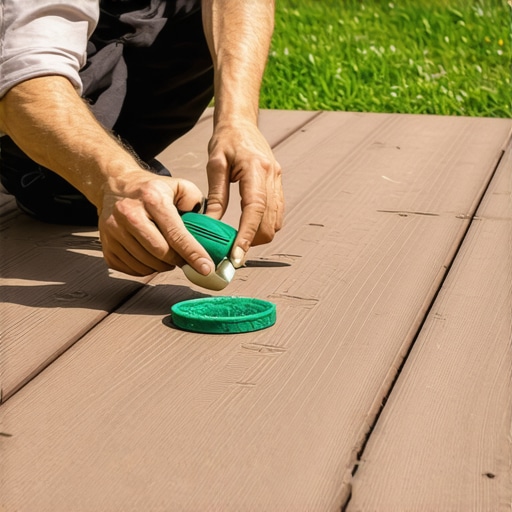
For superficial scratches, a composite deck touch-up marker or stain can work wonders. For deeper gouges, consider a composite repair kit designed for your deck’s material. When I repaired a significant scratch, I used a color-matched epoxy filler, which effectively filled the gap and dried quickly. Always match the repair compound to your deck’s color and texture.
Apply the Filler or Stain Carefully
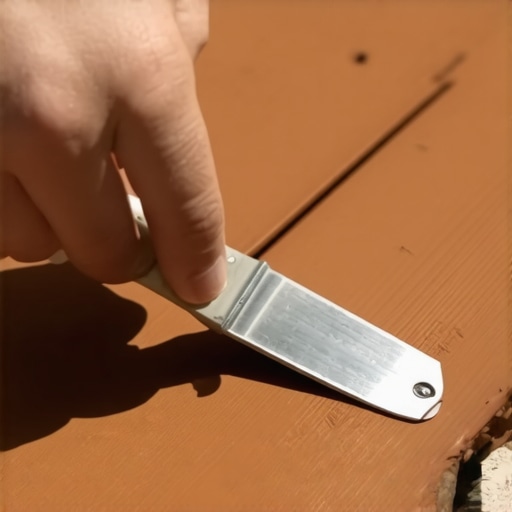
Using a putty knife, apply the repair compound into the scratch, smoothing it flush with the surface. For a more natural look, feather the edges. If using stain or paint, apply with a brush or roller, working in the direction of the grain or board pattern. I recommend doing this in thin layers, allowing each to dry thoroughly, to prevent drips and uneven color.
Sand and Finish for a Seamless Look
Once the filler or stain has dried, lightly sand the area again with fine-grit sandpaper to ensure a smooth transition. Wipe away dust with a damp cloth. Finish by applying a clear sealant or protective coating suitable for composite decks. This step preserves the repair and restores the deck’s uniform appearance.
Maintain Your Deck Post-Repair
Regular inspections and cleaning help prevent new scratches. Avoid dragging heavy furniture and use pads under foot traffic. If you notice signs of deck joist rot or other issues, check your structural integrity [like inspecting your joist hangers](https://deckbuildersneedham.com/checking-your-deck-joist-hangers-for-corrosion-damage). Consistent maintenance keeps your deck looking its best for years to come.
 Many homeowners believe that hiring a deck builder is as simple as picking the first name they find or choosing the cheapest quote. However, this overlooks some crucial nuances that can significantly impact the quality, durability, and safety of your outdoor space. One common myth is that all deck builders are equally skilled and experienced. In reality, expertise varies widely, and a contractor’s specialization can make a substantial difference. For example, a professional who is well-versed in designing and constructing composite decks, considering factors like airflow and material expansion, will deliver a more lasting result than a general handyman. To ensure you’re making an informed choice, look for specialists who understand the nuances of different decking materials; for instance, [why your next deck should be made of PVC instead of wood](https://deckbuildersneedham.com/why-your-next-deck-should-be-made-of-pvc-instead-of-wood) might be a relevant consideration in your decision-making process.
Are Low Bids Always Better Value?
Many fall into the trap of selecting a contractor based solely on the lowest price. While it might seem budget-friendly upfront, cut-rate builders often cut corners, using inferior materials or rushing through the project, which can lead to costly repairs down the line. An experienced deck builder in Needham will not only prioritize quality but also provide comprehensive consultations, including [checking your deck’s structural integrity](https://deckbuildersneedham.com/checking-your-deck-joist-hangers-for-corrosion-damage). Always ask for detailed quotes and references—remember, a higher initial investment can save you money and frustration over time.
Another misconception is that all decking installations focus solely on aesthetics; however, neglecting structural considerations like proper joist spacing or drainage can turn your beautiful deck into a safety hazard. Skilled contractors understand these nuances, avoiding common pitfalls such as inadequate ventilation or improper fastening techniques. For deeper insights, reviewing [how to level an old deck frame](https://deckbuildersneedham.com/the-best-way-to-level-an-old-deck-frame-before-decking) can be enlightening.
Finally, don’t underestimate the importance of insurance and licensing. Many assume that permits and insurance are just bureaucratic hurdles, but they safeguard homeowners from liabilities if accidents or damages occur. An expert in Needham will be transparent about their credentials, and perhaps recommend [specialized insurance for deck projects](https://deckbuildersneedham.com/why-modern-deck-builders-use-lasers-for-perfect-leveling) to cover their work comprehensively.
In sum, selecting a deck builder isn’t merely about finding the lowest price or the quickest solution. It demands understanding expertise, experience with specific materials, commitment to safety standards, and comprehensive planning. Do your research, ask the right questions, and ensure your chosen professional excels in these areas. Have you ever fallen into this trap? Let me know in the comments and share your experiences. A well-informed choice will always result in a deck that lasts for years to come.Maintaining a deck that stands the test of time requires more than just regular sweeping and spot cleaning. It involves a combination of the right equipment, professional-grade tools, and effective maintenance methods. As someone with hands-on experience, I can tell you that investing in precise tools streamlines the process and ensures long-term results.
One essential piece of equipment I rely on is a high-quality cordless drill equipped with a variety of bits. This tool speeds up tasks like removing loose fasteners or installing new hardware. I personally prefer models with brushless motors for longevity and battery life, especially during extensive repair projects. Pairing this with stainless-steel screws, like those recommended in modern construction standards, helps prevent corrosion and guarantees your repairs last.
For surface repairs, a Fein MultiMaster oscillating tool has become invaluable. It allows me to efficiently sand down rough patches, remove old stain, or create precise cuts for custom fittings. Its variable speed and variety of attachments mean I can adapt quickly, saving time and reducing frustration.
Cleaning is another crucial aspect of maintenance. I use a pressure washer set to a moderate PSI—around 1500 to 2000—ensuring thorough removal of algae, dirt, and old grime without damaging the composite surface. A deck-specific cleaning solution, combined with a soft-bristle brush, prepares the surface excellently for any restorative work.
As we look to the future, the trend of integrating smart technology into outdoor maintenance excites me. Imagine using app-controlled sprayers or sensors that alert you to moisture levels, helping you schedule cleaning or repairs proactively. It’s a development I believe will redefine how homeowners maintain outdoor spaces.
For those wondering how to keep their decks functional over time, I recommend setting aside time for annual inspections. Check for loose fasteners, signs of rot, or corrosion, especially on joist hangers, by referencing reliable techniques. For example, routinely inspecting and replacing corroded joist hangers with galvanized or stainless-steel equivalents can prevent structural failures that are costly to fix. To streamline this process, I personally use a magnetic inspection mirror to spot hidden issues quickly.
Finally, adopting a regular maintenance schedule that includes sealing or applying protective coatings will significantly extend the life of your deck. Applying a high-quality, UV-resistant sealant every couple of years keeps the surface vibrant and resistant to weather damage. When applying sealant, I use a sprayer for even coverage, followed by a brush to treat corners and edges carefully.
A key tip I encourage you to try: use an oscillating multi-tool for detailed sanding and cleaning around tight spots or old stain removal. It makes a noticeable difference in achieving a smooth, professional finish and saves countless hours. Remember, consistent upkeep not only maintains the beauty but also enhances safety, preventing issues like loose boards or structural damage. Regularly checking your [joist hangers for corrosion damage](https://deckbuildersneedham.com/checking-your-deck-joist-hangers-for-corrosion-damage) is a simple yet effective practice. Before the next project, consider investing in these advanced tools to elevate your maintenance game and protect your investment for years to come.
Lessons the Pros Don’t Tell You About Deck Restoration
One thing I learned the hard way is that small scratches can sneak up and cause bigger problems if neglected. Recognizing the subtle signs early saved me from costly repairs later. It’s tempting to overlook minor imperfections, but in my experience, proactive attention keeps your deck looking pristine and extends its lifespan.
Another insight is the importance of choosing the right repair products. Not all fillers or stains are created equal—trustworthy brands and proper matching can make or break your restoration efforts. Once I committed to quality materials recommended by seasoned professionals, my repairs blended seamlessly, and the durability improved noticeably.
Lastly, I discovered that maintenance isn’t a one-time effort. Establishing a regular inspection and cleaning schedule, especially inspecting critical areas like joist hangers, prevents small issues from escalating. It’s not just about aesthetics; safety depends on catching issues early. Incorporating these lessons into your routine can make a world of difference in your deck’s longevity.
Tools and Resources I Use to Keep My Deck Perfect
A high-quality cordless drill with variable speed settings is my go-to for fast, reliable fastening and removal tasks. I prefer models with a brushless motor—they last longer and save battery life during intensive projects. Pair it with stainless-steel screws to resist corrosion; I trust them for lasting results.
An oscillating multi-tool has been a game-changer for detailed sanding and cleaning around tight spots or old stain. Its versatility helps me achieve a professional finish with less time and effort. To keep my deck looking its best, I use a pressure washer set to around 1500 PSI, combined with a deck-specific cleaning solution, which effectively removes grime without damaging the surface.
Looking ahead, integrating smart maintenance gadgets like moisture sensors or app-controlled sprayers could revolutionize how we care for outdoor spaces. I believe embracing these technologies will make proactive upkeep more accessible and efficient, ensuring your deck remains beautiful and safe for years to come.
Your Next Step Toward a Deck That Lasts
Investing time and effort into understanding your deck’s unique needs pays off dramatically. Regular inspections, quality repairs, and smart planning will turn your outdoor area into a durable haven for relaxation and entertainment. Don’t wait for problems to escalate—start implementing these tips today and enjoy the satisfaction of a well-loved, resilient deck.
What’s your biggest challenge when it comes to maintaining your deck? Share your experiences below—I’d love to hear what’s worked for you and where you’re still looking for solutions.