It was a hot summer afternoon when I finally realized my backyard deck was more trouble than it looked. As I stepped out, I noticed a wobbly post right at the corner—worse, it was rotting right through the center. That lightbulb moment hit me hard. My sturdy outdoor space, the hub of family gatherings and lazy weekend afternoons, was at risk.
But here’s the thing—I’ve learned that addressing deck post rot isn’t just about patching up gaping holes or replacing a single piece; it’s about understanding the root causes and taking decisive action before the whole structure becomes unsafe. Today, I want to guide you through my journey and share exactly how I fixed that stubborn problem, ensuring my deck remains a safe and inviting place for years to come.
Why Fixing a Rotten Deck Post is Crucial Right Now
Deck posts are the backbone of any outdoor structure. When one starts to rot or decay, it can threaten the integrity of the entire deck. Over time, moisture infiltration—especially in a place like Needham—can lead to hidden mold, weakening the wood from the inside out. According to the National Association of Home Builders, a significant percentage of deck failures are due to post rot and foundation issues—so neglecting this can lead to serious safety hazards.
In my case, I ignored the early warning signs, thinking a fresh coat of stain would do the trick. But that mistake nearly cost me my deck. Once I discovered the extent of the damage, I knew I had to act fast. If you’re like I was, wondering whether that wobbly post is just a minor inconvenience or a disaster waiting to happen—you’re not alone. I initially thought I could just tighten the bolts or replace a few planks, but alas, the rot was more insidious.
Now, I want to assure you—fixing this isn’t as intimidating as it seems. In fact, with the right approach, you can restore your deck’s safety and beauty. If you’ve faced similar issues or noticed your deck showing signs of weakness, keep reading. Together, we’ll go through the practical steps and prevent future failures.
Let’s dig into what I learned and how you can tackle this issue head-on.
Assess and Prepare Your Deck
Begin by inspecting your deck thoroughly, focusing on the suspect post and surrounding areas. Use a sturdy pry bar to gently test for stability—if the post wobbles, it’s time to act quickly. Remove any nearby loose or damaged boards to access the post base. Wearing safety goggles and gloves is essential to protect yourself from splinters and debris. I remember using a hand saw to carefully cut away rotted wood around my problematic post, which revealed the extent of the damage below the surface.
Remove the Damaged Post
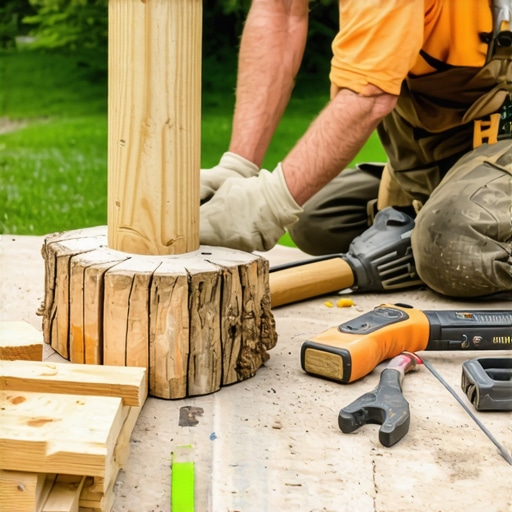
Use a reciprocating saw or circular saw to cut through the post at its base, making sure to leave a clean cut for easier replacement. Support the structure temporarily with jack posts or braces to prevent any collapse during removal. Carefully lift out the rotten post, taking care not to damage the concrete footing or adjacent joists. In my case, I found that some of the concrete footing was compromised, prompting me to check for signs of shifting as explained in foundation shifting signs.
Prepare the Foundation
Before installing a new post, ensure the footing is solid. If there are cracks or signs of settling, consider reinforcing or replacing it. Pour a new concrete base or install a post anchor designed specifically for your deck’s load requirements. I used a galvanized metal post base, which prevents moisture contact and prolongs durability, aligning with recommendations about using the right materials for longevity. This step is crucial to prevent future rot, especially in humid climates like Needham.
Install the New Post
Cut your replacement wood to the required length, ensuring it matches the original tone and style. Treat the wood with an eco-friendly stain, avoiding bleach which damages wood over time (learn why). Position the post atop the prepared footing or anchor, then secure it with galvanized bolts or post anchors. Make sure the post is plumb—using a level—so your deck remains even and safe. I personally used a spirit level to double-check the vertical alignment after securing the new post.
Reinforce and Seal the Structure
Replace any removed boards and tighten loose connections. Seal all wood surfaces with a high-quality, eco-friendly stain to protect against moisture ingress. Proper sealing is essential to prevent future decay, especially if you live in Needham’s damp climate. Regular maintenance—like inspecting for signs of shifting or rot—will keep your deck safe and beautiful. You can explore options for eco-friendly stains that suit your style and sustainability goals.
Many homeowners assume that hiring local deck builders in Needham means relying solely on their reputation or previous projects, but there’s more beneath the surface. A common misconception is that all deck contractors are equal, yet expertise varies dramatically when it comes to understanding nuanced local climate challenges and building codes. For example, some overlook the importance of proper ventilation under the deck, which can lead to future rot and structural issues—a mistake I uncovered firsthand. It’s tempting to choose the cheapest option, but cutting corners often results in costly repairs down the line. Instead, focus on contractors who prioritize thorough site assessments and materials like eco-friendly stains to prolong your deck’s lifespan.
Are All Deck Builders Equally Knowledgeable About Local Climate Conditions?
Many believe experience is enough, but understanding the specific needs of Needham’s climate is crucial for lasting results. Studies show that climate-adapted construction can extend a deck’s life significantly, reducing maintenance and safety risks (source). I’ve seen projects where neglecting climate considerations led to premature warping or rot, which could have been avoided with proper expertise. When selecting your contractor, ask about their experience with the climate factors unique to Needham, like humidity and frost heaves. Remember, the cheapest quote may omit these vital considerations, costing you more in repairs. Staying vigilant about these nuances helps ensure your deck remains a safe and beautiful addition for years to come. Don’t rely solely on surface impressions; dig into a contractor’s understanding of local conditions and proven techniques. Want to learn more? Check out how to find a professional deck designer in Needham, who can bring this expertise to your project. Have you ever fallen into this trap? Let me know in the comments.Maintaining a beautiful and safe deck requires more than just intuition; it demands the right tools and methods to keep everything in top shape. Over the years, I’ve found that investing in specific equipment significantly eases the maintenance process and ensures long-term durability. One of my go-to essentials is a high-quality **digital moisture meter**; it helps me detect hidden moisture behind boards, preventing rot before it becomes visible. I personally prefer models like the Wagner MMC220, which provide accurate readings and are easy to use. Regular inspections with a moisture meter help monitor the health of your deck, especially in Needham’s humid climate, where moisture problems can stealthily cause rot. Additionally, a **power drill equipped with deck-specific screwdriver bits** makes tightening loose screws or replacing damaged planks swift—saving time and reducing manual effort. I recommend using bits like the Milwaukee SHOCKWAVE Impact Duty, as they are durable and resist wear, ensuring a secure fit every time.
For cleaning and preparing the wood surface, I rely on a robust **deck scrub brush** paired with eco-friendly cleaning solutions. A quality brush with stiff bristles, such as the ACS Pro Grip, helps remove mildew, dirt, and old stains without damaging the wood. Remember, thorough cleaning extends your stain’s life and maintains the deck’s appearance. To seal and stain, I prefer **squeeze applicators** that allow even coverage, such as Purdy’s Quick-Apply Stain Applicator. Applying eco-friendly stains like those from the Needham-specific range helps protect the wood from moisture and UV damage, prolonging its lifespan.
Looking ahead, I predict that smart maintenance tools—integrating sensors with mobile apps—will revolutionize deck upkeep by providing real-time health reports. For now, experienced homeowners should focus on precise, manual inspections combined with reliable equipment to maintain their decks effectively.
**How do I maintain my deck over time?** Regularly inspecting with a moisture meter, tightening fasteners with a durable power drill, and cleaning thoroughly with specialized brushes are tried-and-true methods. Incorporating these tools into your routine ensures your deck remains a safe, welcoming space for years to come. If you’re interested in elevating your maintenance process, try using a moisture meter during seasonal inspections to catch issues early. It’s a small investment that pays off in longevity and safety. For tailored advice, check out how professional deck contractors in Needham utilize these tools for optimal results and avoid costly repairs. Remember, leveraging precise equipment makes all the difference in keeping your outdoor space pristine and secure.
The Hidden Pitfalls of DIY Deck Repairs That Surprise Even the Most Prepared
One of the biggest lessons I discovered is that rot and structural issues often hide beneath the surface, misleading even cautious homeowners. I once thought a quick fix would suffice, but the rot was more extensive than I anticipated. Now, I understand that investing in proper assessment tools and seeking expert advice can save time, money, and ensure safety in the long run.
Choosing the Right Materials and When to Trust the Pros
Initially, I believed that all pressure-treated wood was equal, but after researching, I realized that selecting quality materials—like galvanized steel post bases—and hiring experienced professionals prevent future problems. Visiting a trusted contractor, such as those found in Needham, who understands local climate nuances, made all the difference. Their expertise ensured that my deck was built to last and withstand moisture and seasonal changes.
Embracing Preventative Maintenance for Lasting Value
Regular inspections, applying eco-friendly stains, and using moisture meters are game-changers. These practices helped me catch potential issues before they escalated. Incorporating easy-to-use tools and establishing a routine can drastically extend your deck’s lifespan. Remember, a well-maintained deck isn’t just about appearance—it’s about safety and peace of mind for your family and friends.
Curated Resources for Building Confidence in Deck Care
Over the years, I’ve relied on specific tools and trusted guides that truly make a difference. The Wagner MMC220 moisture meter has been invaluable for detecting hidden rot, while high-quality deck stain applicators like the Purdy Quick-Apply help achieve professional results. For expert insights, I turn to local Needham deck contractors who understand the climate and building codes—ensuring my repairs stand the test of time. Books like “The Complete Guide to Deck Maintenance” also offer practical tips that I revisit regularly.
Your Next Step: Elevate Your Deck Security and Style
Fixing a rotten deck post might seem daunting, but with the right approach, you can turn it into a rewarding project. Embracing proper assessment, quality materials, and routine maintenance empowers you to protect your investment. Remember, a safe and beautiful deck is just an informed decision away. Now, I challenge you—have you ever hesitated to start a repair because of uncertainty? Share your experience below and let’s learn together!